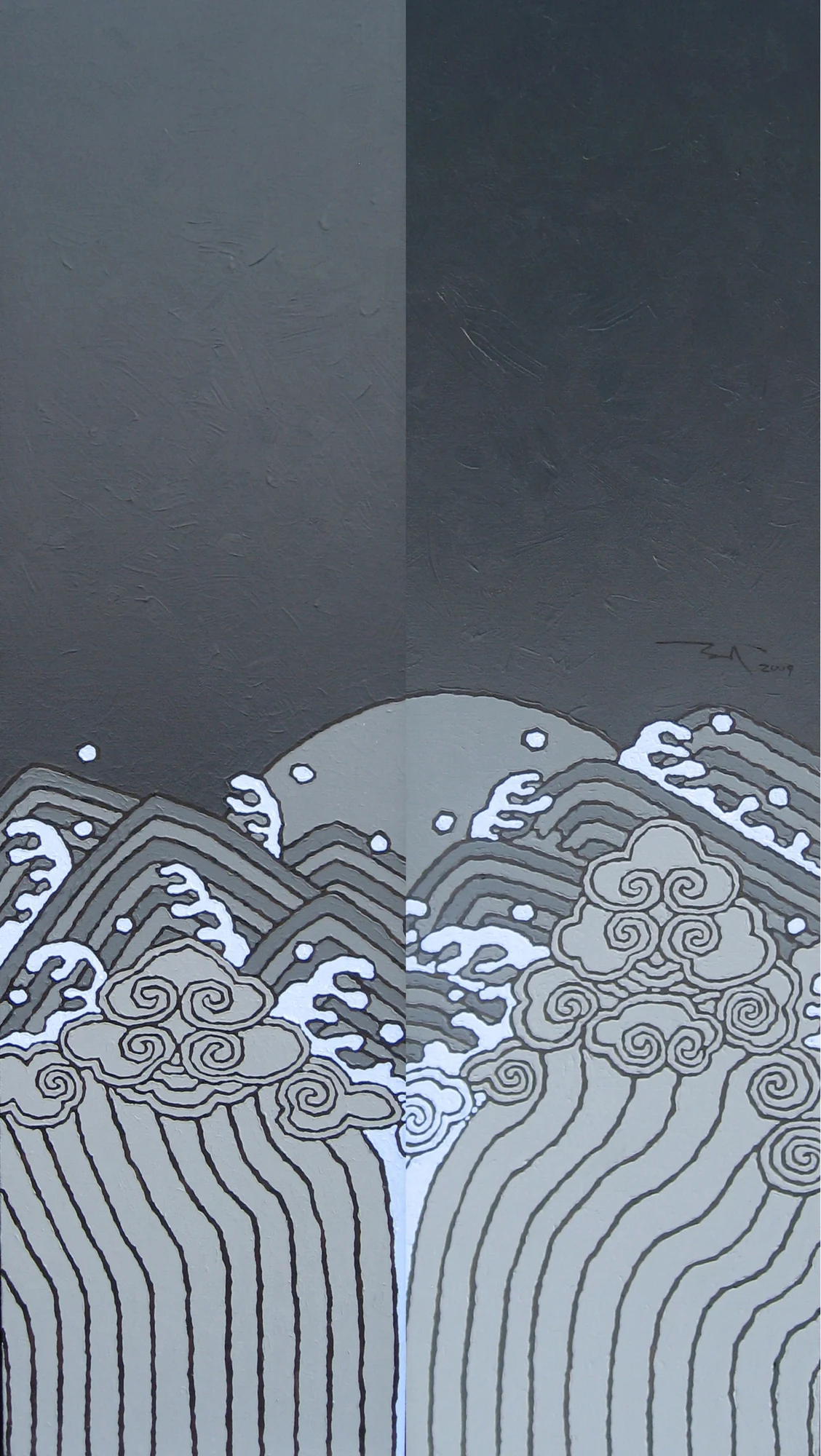
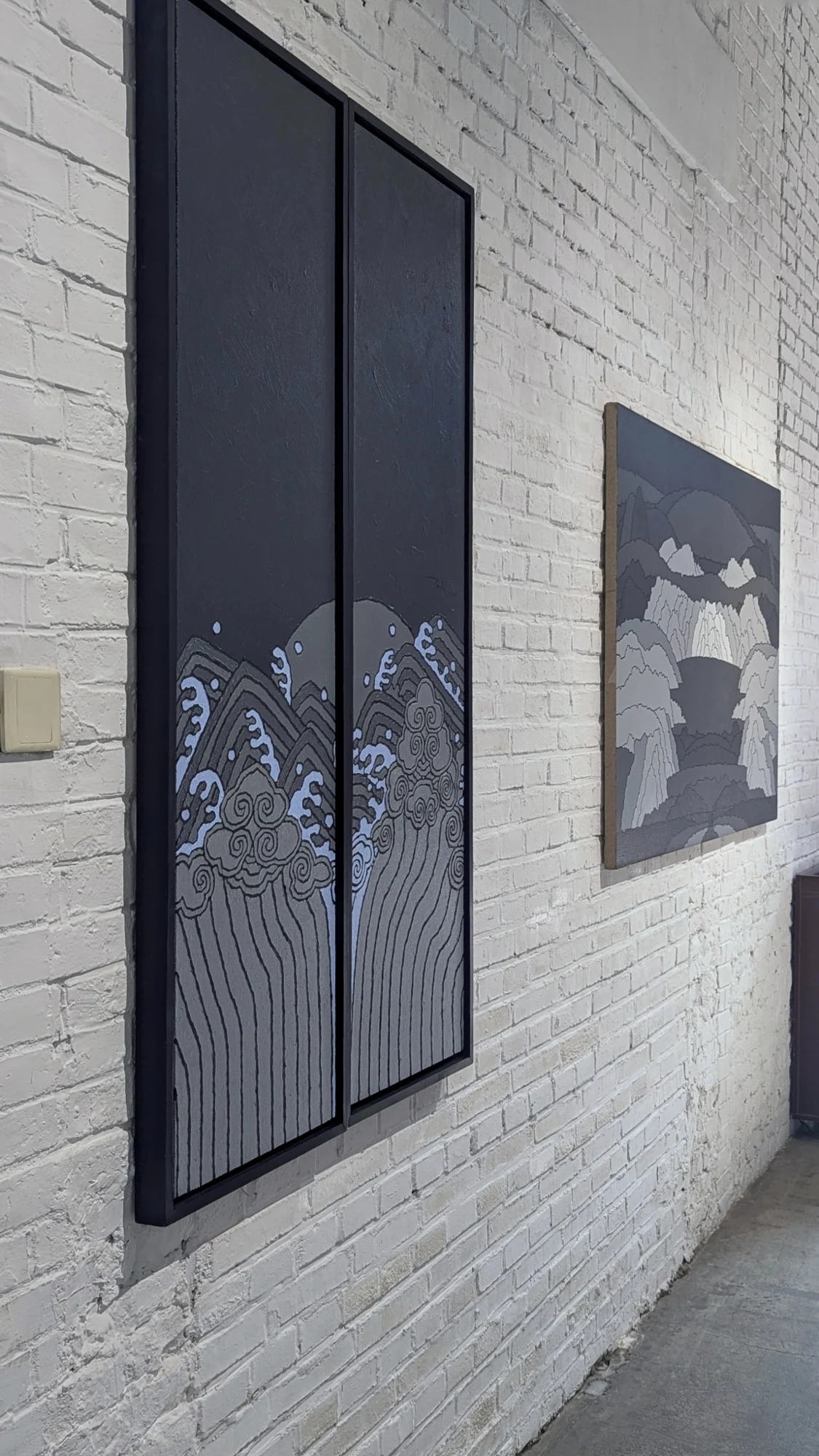
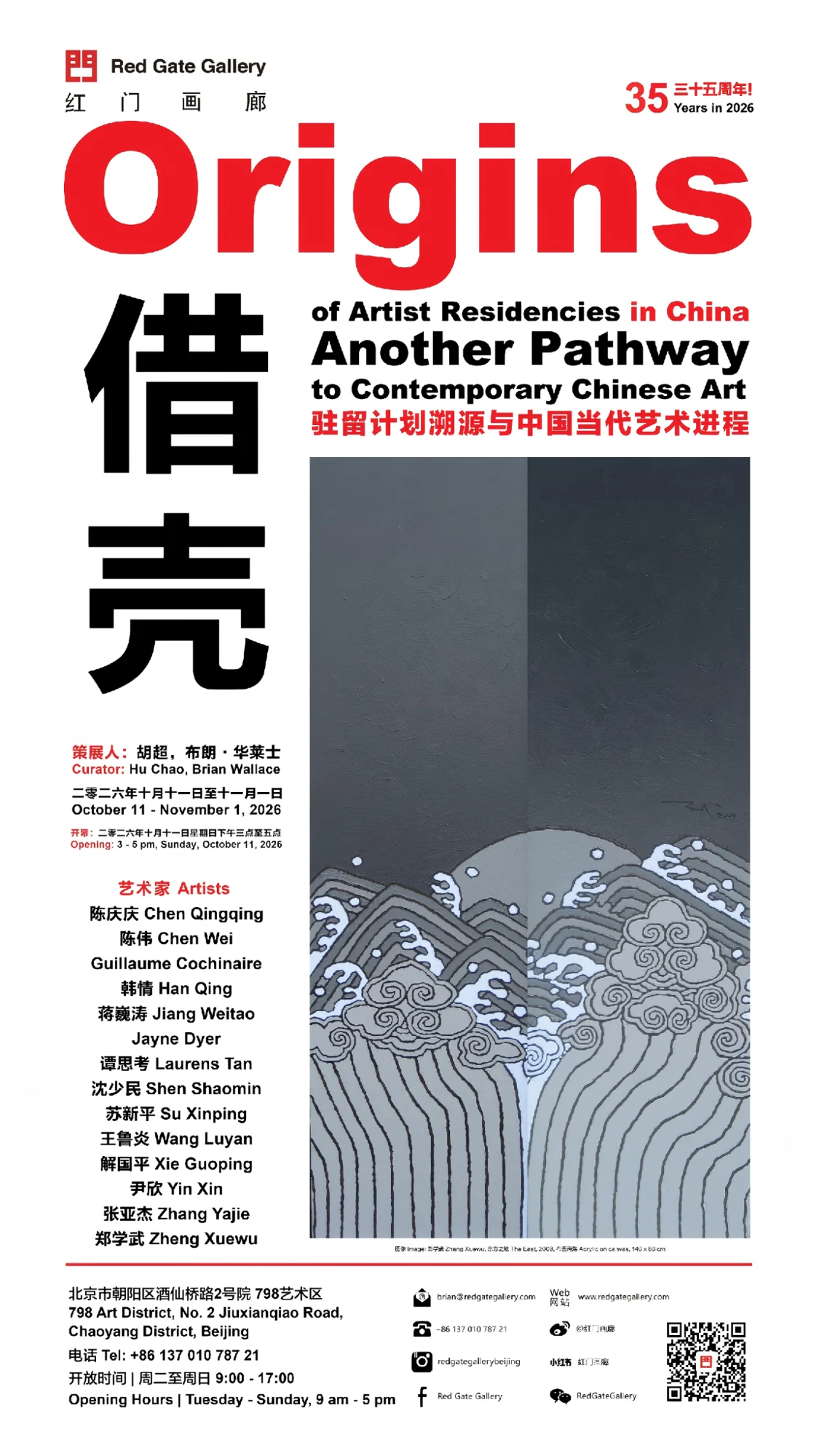
Zheng Xuewu, The East, 2009. Acrylic on canvas, 146 × 86 cm. Courtesy of Red Gate Gallery.
The exhibition
How did artists come to know the world?
Artists stay and make work somewhere else. Everyday life, encounters with fellow artists and unfamiliar surroundings change their knowledge, methods and relationship to the world.
Origins places artist residency within the formation of contemporary Chinese art. It follows early international cooperation, the growth of local programmes and the development of wider networks, tracing how movement and staying became part of artistic practice.
Transplantation, Grafting and Mycelium: three stages through which a residency model enters new environments, takes root and forms connections.
01
Transplantation
移植1990s–early 2000s: the residency model enters China
In the early 1990s, Australia’s Asialink began sending artists to China on residencies. Red Gate Gallery, founded in 1991 by Australian Brian Wallace, helped these artists find accommodation and studio space and connect with Beijing’s art community. This organised form of artist mobility helped residencies take root in China’s emerging contemporary art ecosystem.
嫁接From 2001 onward: residencies take new forms in local contexts
In 2001, Red Gate Gallery launched its own residency program in Beijing, building on a decade of cooperation with its Australian partners. The same year, the Chinese European Art Center (CEAC) started its program in Xiamen, drawing on its European connections. These early local programs put down deep roots — in local cultures, social resources and artistic communities — and developed forms of residency shaped by the Chinese context.
菌丝网络Since 2009: residencies grow into an open network
In 2013, China Residencies launched its bilingual website and went on to publish annual reports from 2014 to 2021, using both to connect residency programs, institutions and artists across China and the world.
In the meantime, the needs of Chinese artists themselves have driven homegrown experiments: Shangyuan Art Museum, now running multiple sites, and Zheng Xuewu's Hudson Art Center in the United States.
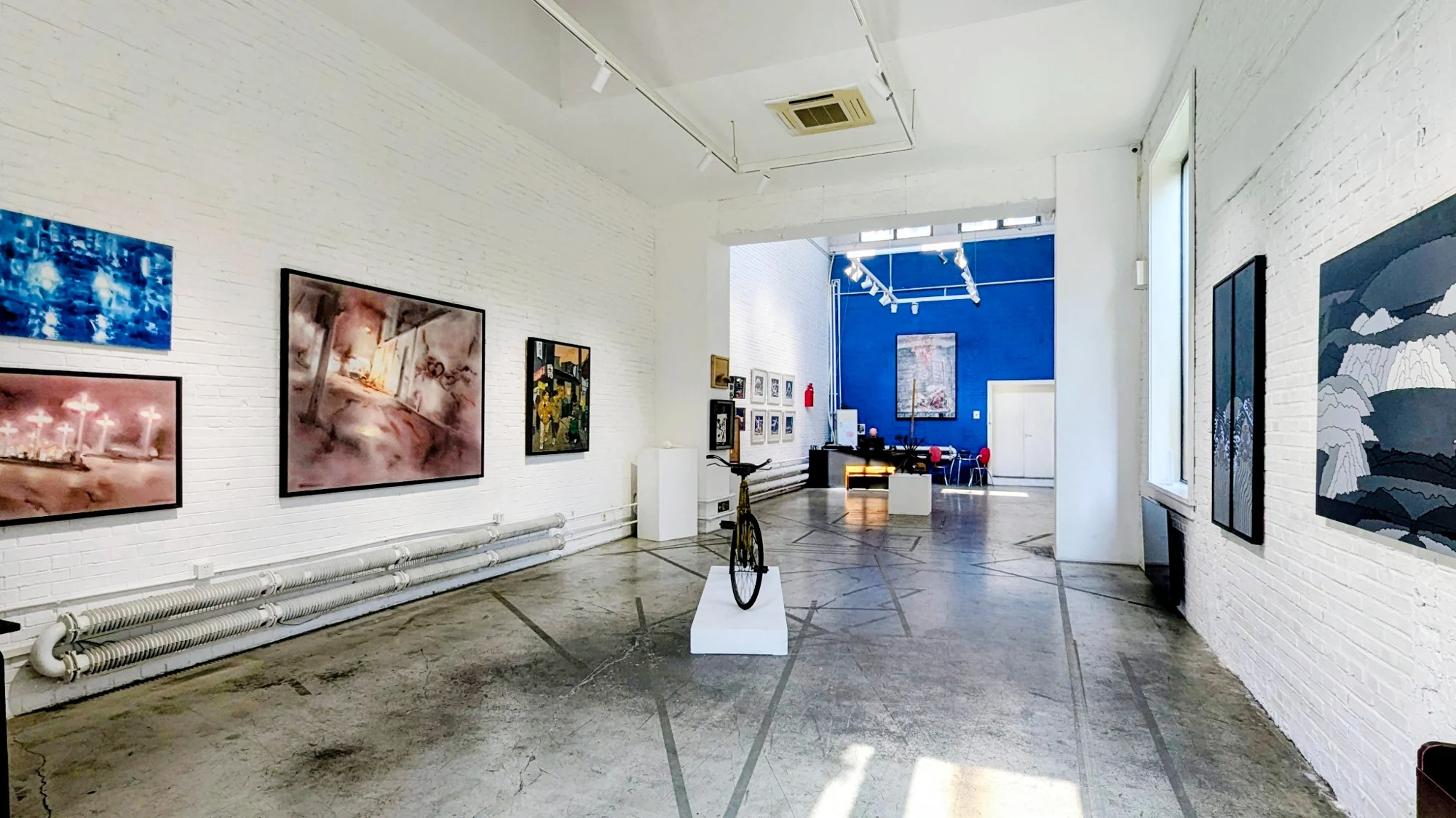
Installation view of Borrowing the Shell, Red Gate Gallery, Beijing, 2026. A view through the gallery with Wang Luyan’s W Bicycle–25. Photo: Zhang Guozhong. Courtesy of Hu Chao.
Works and experience
Movement, stays and what remains
Paintings, prints, installations and sculpture open different perspectives on residency histories. Explore the selected works with artist, title, date, medium and dimensions.
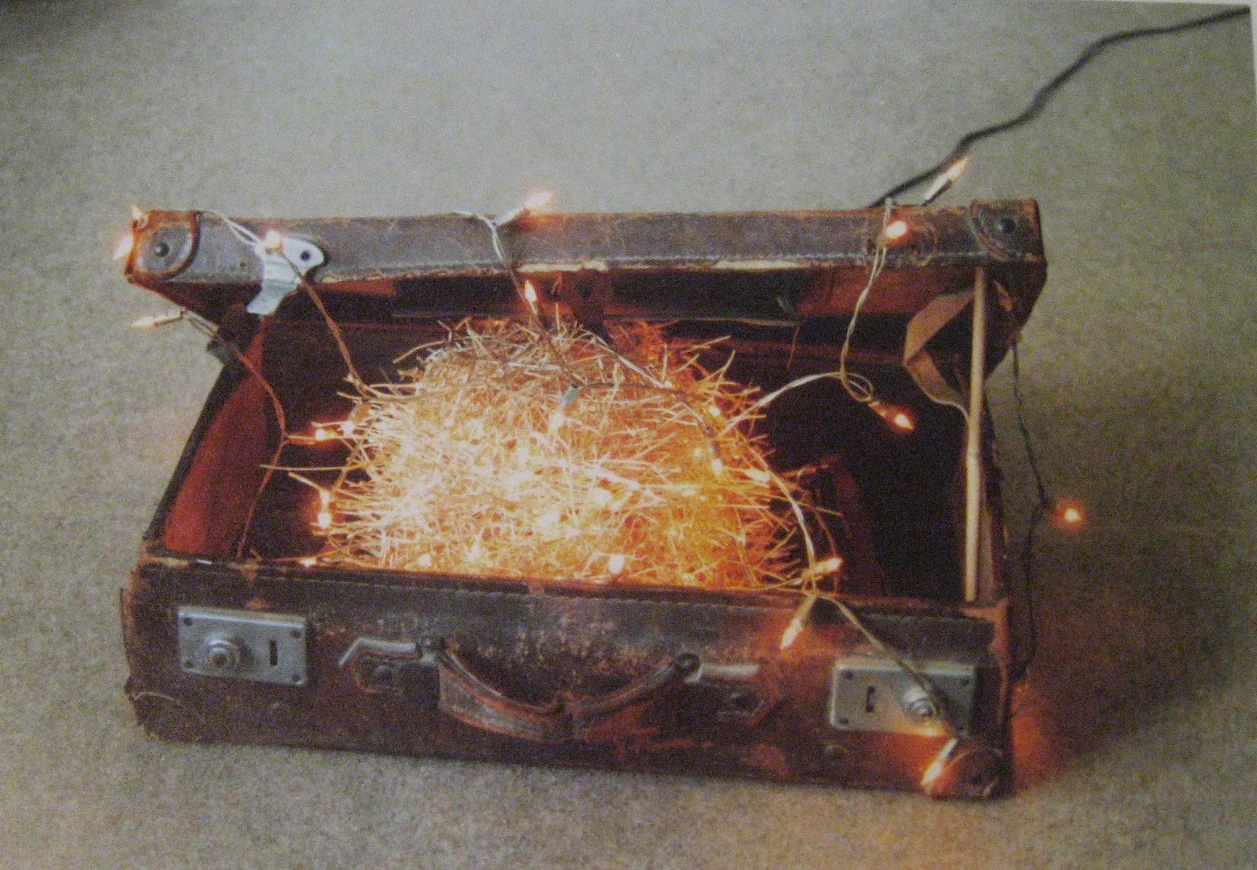
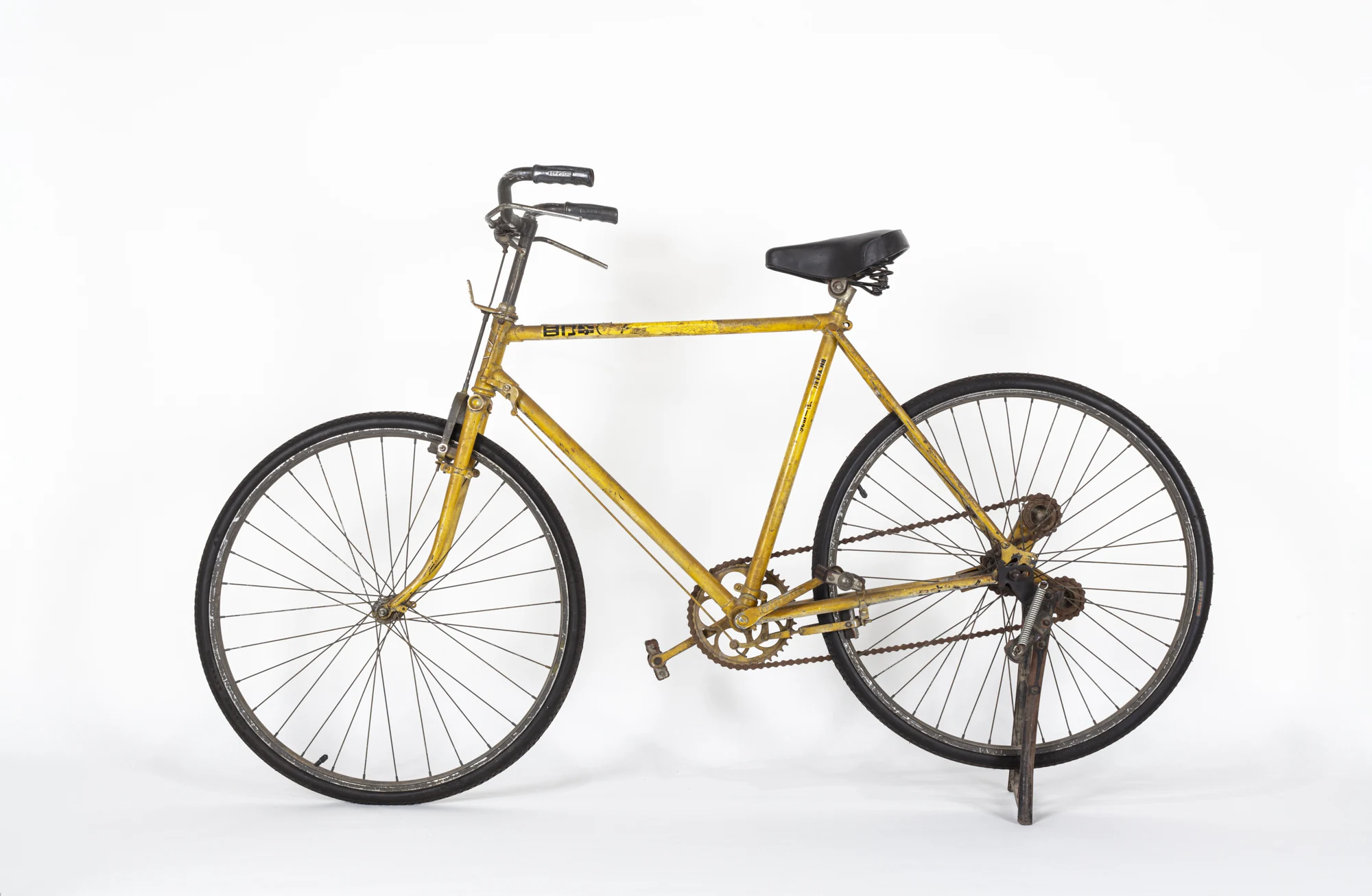
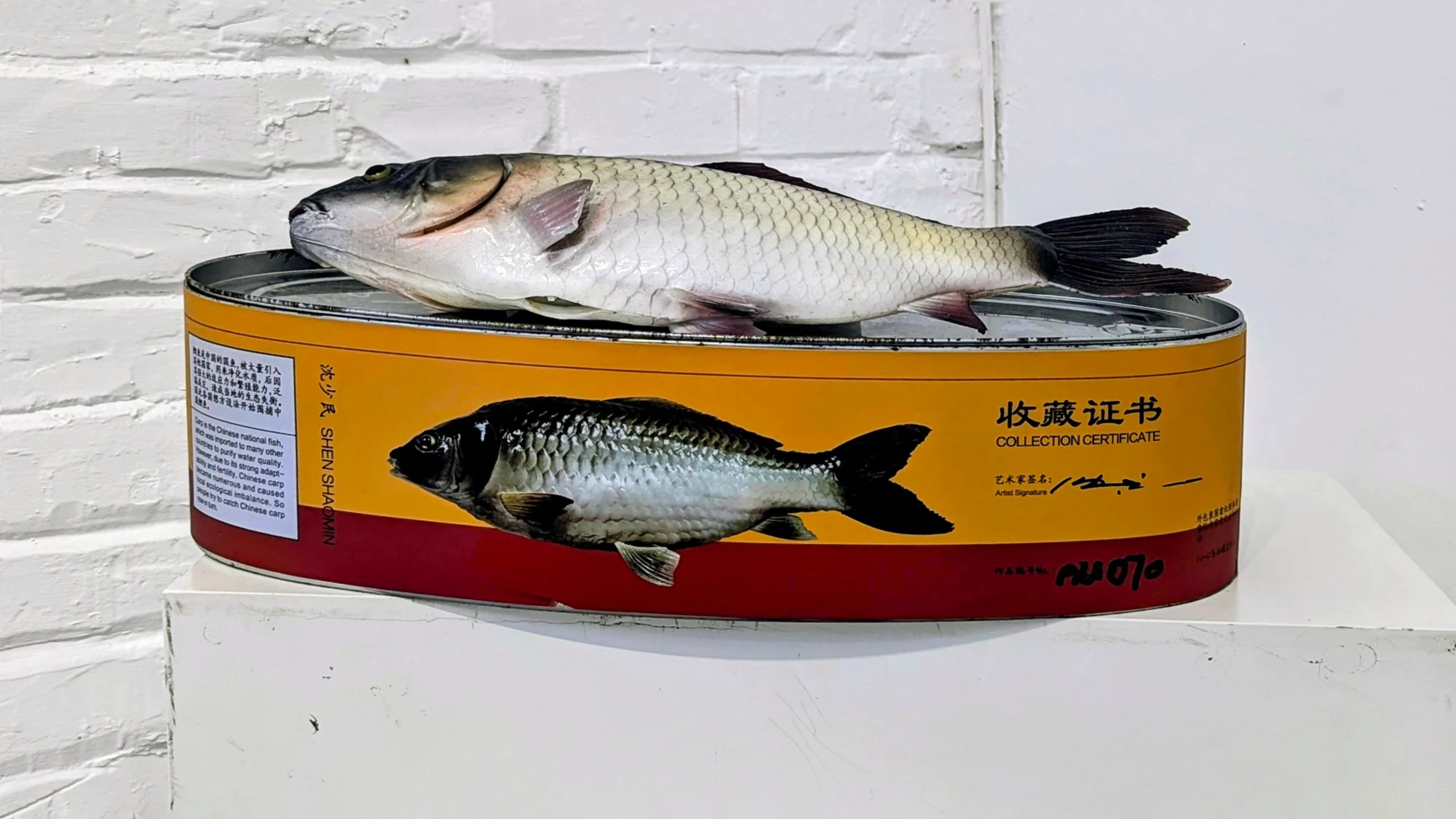
Chen Qingqing, On the Way Home, 1996. Mixed media, 20 × 50 × 30 cm. Courtesy of Red Gate Gallery.Wang Luyan, W Bicycle–25, 1996. Installation, 104 × 180 × 50 cm. Courtesy of Red Gate Gallery.Shen Shaomin, Chinese Carp, 2025. Special presentation box with certificate, 11 × 42 × 21 cm. Installation view, Borrowing the Shell, Red Gate Gallery, Beijing, 2026. Courtesy of Red Gate Gallery.
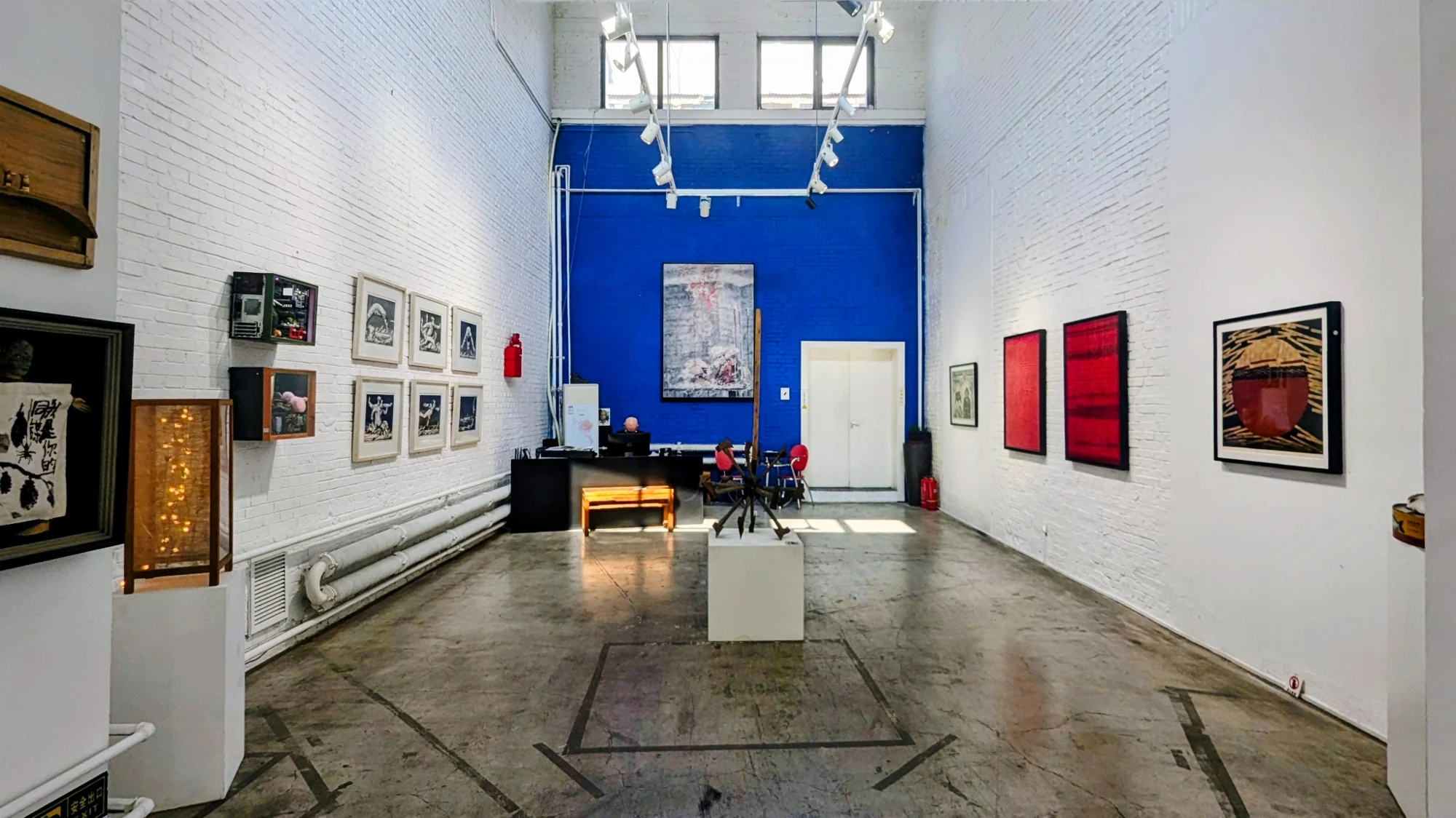
From the white walls to the blue end wall, see works in relation to one another. Select an image to enlarge it, or explore the full set of 17 installation views.
Installation view of Borrowing the Shell, Red Gate Gallery, Beijing, 2026. A view towards the blue end wall. Photo: Zhang Guozhong. Courtesy of Hu Chao.Installation view of Borrowing the Shell, Red Gate Gallery, Beijing, 2026. Works by Zheng Xuewu. Photo: Zhang Guozhong. Courtesy of Hu Chao.
Participating artists, in the order listed on the official poster.
Chen Qingqing陈庆庆
Chen Wei陈伟
Guillaume Cochinaire纪尧姆·克钦耐尔
Han Qing韩情
Jiang Weitao蒋巍涛
Jayne DyerJayne Dyer
Laurens Tan谭思考
Shen Shaomin沈少民
Su Xinping苏新平
Wang Luyan王鲁炎
Xie Guoping解国平
Yin Xin尹欣
Zhang Yajie张亚杰
Zheng Xuewu郑学武
Curator
Hu Chao
Art historian and curator. His research and exhibitions examine the movement of artists, images and institutions, and how these movements help shape modern Asian art.
Founder of Red Gate Gallery. He established the gallery in Beijing in 1991, supported exchanges between Chinese and international artists, and launched Red Gate Residency in 2001.