A NOVEL BY HU CHAO
Taishan Shi
Bu Gandang
(《泰山石不敢当》)
A Company’s “Private Realm”
Eighteen-year-old Zhao Tingting works as a receptionist at a pharmaceutical company in Shanghai. She is asked to organise a team-building trip to Mount Tai, only to discover that the company plans to dismiss her once it is over.
CUHK-Shenzhen Library · 2026 Mount Tai exhibition reading list ↗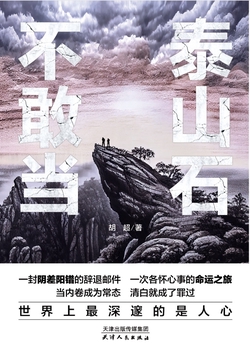
ABOUT THE NOVEL
About
the novel.
For centuries, Mount Tai in eastern China has helped rulers give political authority a sacred foundation. In 219 BCE, following his unification of China, the First Emperor, Qin Shi Huang, performed the fengshan sacrifices to Heaven and Earth there. The mountain became a place where emperors proclaimed their achievements and affirmed their claim to the Mandate of Heaven—the heavenly sanction for their right to rule.
Mount Tai also stands in the homeland of Confucius, whose birthplace, Qufu, lies nearby. Its associations with the sage gave the mountain a further significance within Confucian culture: a society ordered through ritual, hierarchy, and the obligations binding rulers and subjects. Respect for established authority could be understood as participation in a larger moral order.
The mountain belonged, moreover, to an imperial geography. Through state recognition and ritual patronage, the Five Sacred Mountains formed a system representing east, west, south, north, and centre across China’s historical agrarian heartland. Mount Tai occupied the eastern position and held precedence among the five. Imperial worship of these mountains gave geographical form to the idea of a realm united under a sovereign.
Hu Chao’s novel brings this accumulated authority into the running of a private company. The relationship between an emperor and his subjects finds an intimate, sometimes absurd counterpart in the dealings between business owners and employees. The owners have their own small realm to govern. They need people to fulfil their duties, recognise the hierarchy, and commit themselves to the enterprise. Employees have expectations too: recognition, protection, a share of the rewards, perhaps a chance to advance. Keeping the company alive requires cooperation among people whose interests never quite coincide.
This parallel between governing an empire and managing a company shapes the novel. A corporate trip to Mount Tai offers the owners an opportunity to borrow the mountain’s prestige, turning a business gathering into a ritual of shared purpose and renewed allegiance. One participant recognises the excursion as another form of imperial self-consecration.
The arrangements fall to Zhao Tingting, an eighteen-year-old receptionist at a pharmaceutical company in Shanghai. While organising the trip, she discovers that the owners intend to dismiss her once everyone returns. Managers respond to a request for their opinions with a succession of criticisms, including colleagues who scarcely know her. She must still organise their journey and accompany them up the mountain.
As the excursion unfolds, the novel follows the ambitions and grievances of the people around her. An entrepreneur returned from America hopes to build a successful business; his wife keeps a close watch on the money and the people handling it. Managers defend their departments, cultivate allies, and explain why their personal priorities serve the company as a whole. Recruitment disputes and investment decisions acquire the atmosphere of court politics. Everyone has a persuasive account of what ought to be done.
Drawing on Chinese storytelling traditions, Hu moves freely between characters’ thoughts, commercial dealings, historical anecdotes, and mischievous asides. The humour often emerges from the ease with which people turn self-interest into principle—and come to believe their own explanations. Tingting, meanwhile, struggles to understand what she has done wrong. On a mountain burdened with centuries of teachings about duty, authority, and moral conduct, she is trying to make sense of her first job.
- 01Cable Car
- 02Train
- 03Tai’an
- 04Daizong Archway
- 05Heavenly Kitchen
- 06Heavenly Stone
READ THE NOVEL / IN CHINESE
Selected
excerpts.
Excerpts from Hu Chao’s Taishan Shi Bu Gandang, presented in the original Chinese. Subheadings have been added for this selection.
一、夫妻俩在潮州楼商量回国
张芬芳开车载着王亮,到费城唐人街取名片,一路上推心置腹,语重心长。俩人去了他们家庭聚会的定点餐馆“潮州楼”。王亮爱吃这一家的榴莲酥。
张芬芳知道,男人有时需要的只是一点鼓励。在馥郁浓厚的榴莲气息中,趁着王亮心情逐渐转好,张芬芳点拨他,说:要想回中国做事情,必须要克服小知识分子的懦弱和谦逊。扫帚不到,灰尘不会自己跑掉;脸皮太薄,钻石没法自己闪耀。
张芬芳越说越来劲,越想越心思透亮,跟王亮科普一番人情世故;俩人不由得目光缠绵,心心相印。金风玉露一相逢,胜却人间无数:
谈到神魂颠倒处,轻舟已过万重山。
夫妻俩趁热打铁,顺便总结了归国三十六计,硬是把在供奉着金色弥勒佛和红脸关公的潮州楼的餐叙,开出了战略转折的波澜壮阔。
战略战术,最难得的是步步为营、稳扎稳打。
比如,在潮州楼商议之后,张芬芳就开始在日常往来的华人社群里宣布:王亮当年停止读博士,是因为想着快点到企业从事研发,积累管理和商业经验。
她恶狠狠地对王亮说:“千万别死脑筋,以为博士学位才是研发人员的门槛。国人放眼看世界都已经一百五十多年,比尔·盖茨、乔布斯,各种大学没读完就去创业,成为全球顶尖富豪的故事,国内人比你还熟悉。你说自己不读博士而中途出来做企业,在国内是加分项;人家只会对你刮目相看,认为你是天纵奇才,俗气的大学围墙束缚不住你展翅高飞的理想,平庸的学术生涯阻挡不了你创新创业的热望。”
二、办公室里的“众大臣”
真实情况是:李大维单枪匹马签下进口合同。王亮身边的各路人马眼红耳热,赤胆忠心受到刺激,纷纷流露出位卑不忘护主的情怀;一时间,办公室门口变成网红打卡地,摩肩接踵,群雄轮流进谏,提醒王亮要防范国际商业风险。有老成持重者更是说,公司没有进口资质,设备只能自用,拿了补贴再倒手出去涉嫌走私。事关老板声誉,吾皇一世英名,切不可听信谗言,否则轻有经济损失,重有囹圄之灾。众大臣一拥而上,含沙射影,旁敲侧击,指天画地,赌咒发誓。
三、最懂老板的人
情节背景:人事负责人林丽珊想阻止一名北大毕业生成为总经理助理。面对老板王亮,她有一套很体贴的理由。
林丽珊接着说:王亮是美国做派,非常独立,不像国内先富起来的土豪劣绅,爱摆架子使唤部下。公司上下,向来都钦佩王亮自己处理琐事,订机票、订酒店有时为了效率都自己在手机上操作,亲力亲为,不愧是经过欧风美雨熏陶。这会儿如果要招助理,决计不需要一个生活秘书,不需要一个让人以为摆架子撑场面的跟班,而是一个吸引投资、拓展业务方面的高参。身边有这样一个专业人士做助理,才显出王亮的国际阅历,有利于塑造公司的形象。
这话的确打动王亮了。
四、好风凭借力,送我上泰山
翻开地图仔细看看,泰山是个好地方,火车能够到达,还有夜班车,比高铁还便宜。登山路上也能有很多单独相处的时间,跟这些人一对一摸个底,交个心。
还有呢,再往深处想,就跟大师点破的那样,泰山是五岳之首,历朝历代的皇帝为了祈祷天下太平、万民归心,都要去泰山封禅。尊重泰山,就是尊重秩序,尊重等级,尊重彼此在公司的地位。
去泰山这座神山圣山开管理会议,也就应了大师那句话:“不要入宝山空手而返”。
张芬芳有些激动。泰山石敢当,是不是也可以说,泰山石头特别坚硬,敢于担当,象征着人能够承担责任?去朝拜泰山,也彰显我们的员工就是要勇于承担责任,大家都要像泰山石一样,在关键的时候能够挑大梁。
王亮也忍不住点头。
夫妻俩想着去泰山的这个决定背后还有这么多的寓意,内心真是乐开了花。大师预测的这一年,果真是顺利无比。收购了连锁药店,公司的题材和故事一下子就变大了,不再只是一个实验室一样的医药开发小公司,而是有线上线下零售,可以进入互联网领域的高科技公司。朝着这个方向发展,感兴趣的投资人不是一个两个,正是:
好风凭借力,送我上青云。
不过,在这里,张芬芳把薛宝钗的这句诗改为:好风凭借力,送我上泰山。
五、这就是排比的手法嘛
情节背景:婷婷从小学语文课上学过的“排比”,想到了讨论辞退自己的邮件。
赵婷婷不无恶意地联想到,老板娘率先发难,丢出个邮件,说要解雇前台,其他收件人此起彼伏跳出来表个态,争先恐后地围绕这个话题,每个人都找一个理由来支持老板娘。
这就是排比的手法嘛。
多么一气呵成,多么酣畅淋漓!
这么想着,赵婷婷觉得有点滑稽,嘴角不由泛起一缕微笑,但到底还是有些悲怆,苦中作乐只是一瞬,随即心里一阵酸楚。
正午阳光晃眼,十分明亮,眯着眼睛本来就难受,偏偏山顶上还山风浩荡,吹得人越发泪水满眶。
FROM THE AUTHOR’S INTRODUCTION
Words, digressions
& the storyteller.
A novel is, after all, an intellectual game played with words. Subtle clues may create narrative tension and release, but a digression here and a detour there can also offer the pleasure of talking around a subject.
LIBRARY & EXHIBITION RECORD / 2026
Included in the Mount Tai exhibition reading list
The Chinese University of Hong Kong, Shenzhen Library
In 2026, the Library’s Art Infinity Mount Tai exhibition included this novel among the library readings in “Starting from Mount Tai Under Heaven,” alongside holdings on the mountain’s religious traditions, historical texts, natural heritage and literary writing.
PUBLICATION
Taishan Shi Bu Gandang
Hu Chao
- Publisher
- Tianjin People’s Publishing House
- First edition
- May 2023
- ISBN
- 9787201192864
- Language
- Chinese