Notes / Field Notes
Since the 1970s · Domestic labour and art
Women Artists on Migrant Domestic Labour
Views from the Philippines and Singapore
展览资料 / EXHIBITION RECORD
无畏:女性另造的新境Fear No Power: Women Imagining Otherwise
- 展期 / Exhibition dates
- 2026年1月9日—11月15日9 January–15 November 2026
- 主办机构 / Presented by
- 新加坡国家美术馆National Gallery Singapore
- 地点 / Venue
- 市政厅翼座B1楼,The Ngee Ann Kongsi Concourse GalleryCity Hall Wing, Level B1, The Ngee Ann Kongsi Concourse Gallery
- 门票 / Admission
- 免费入场Free admission
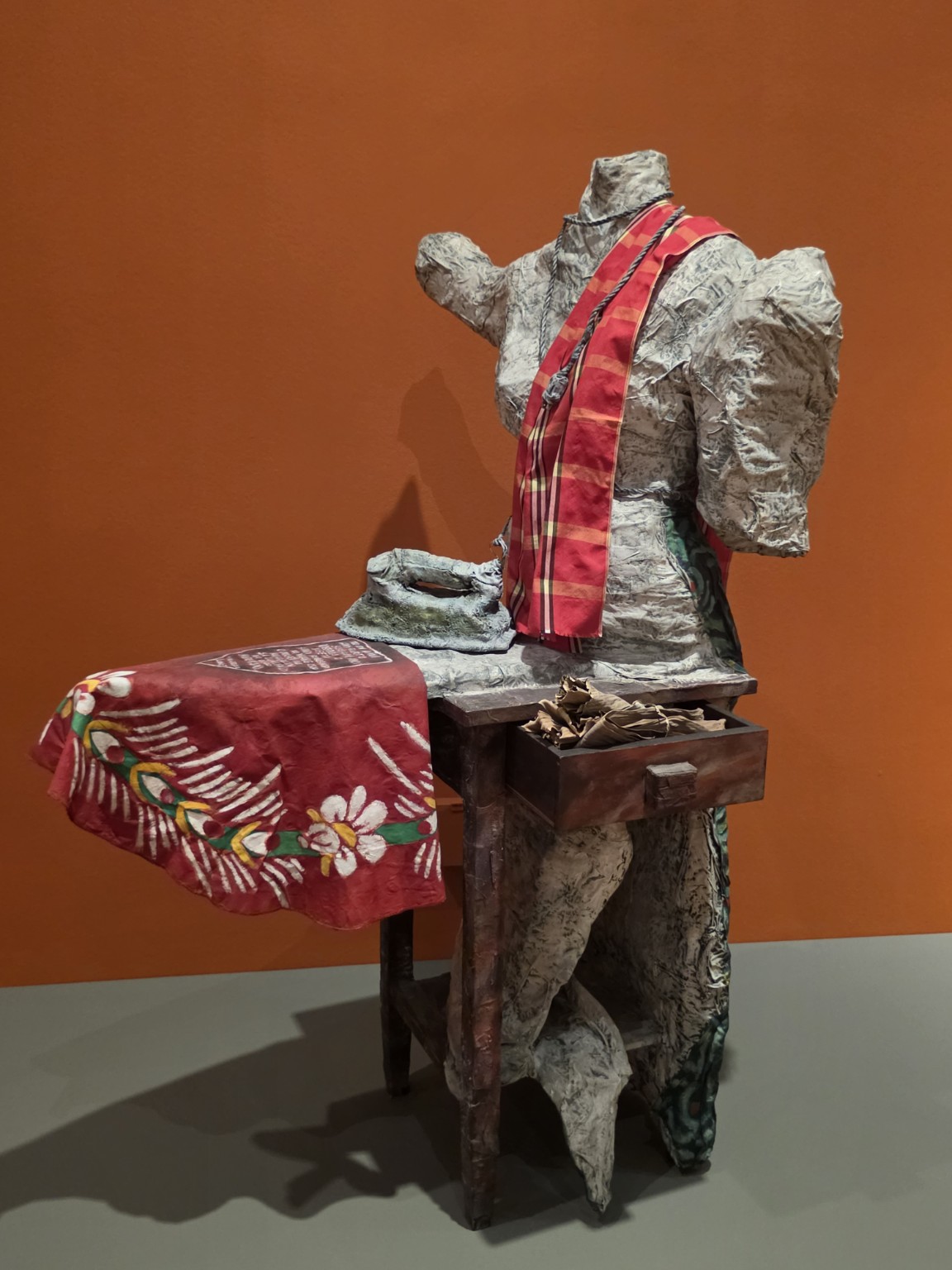
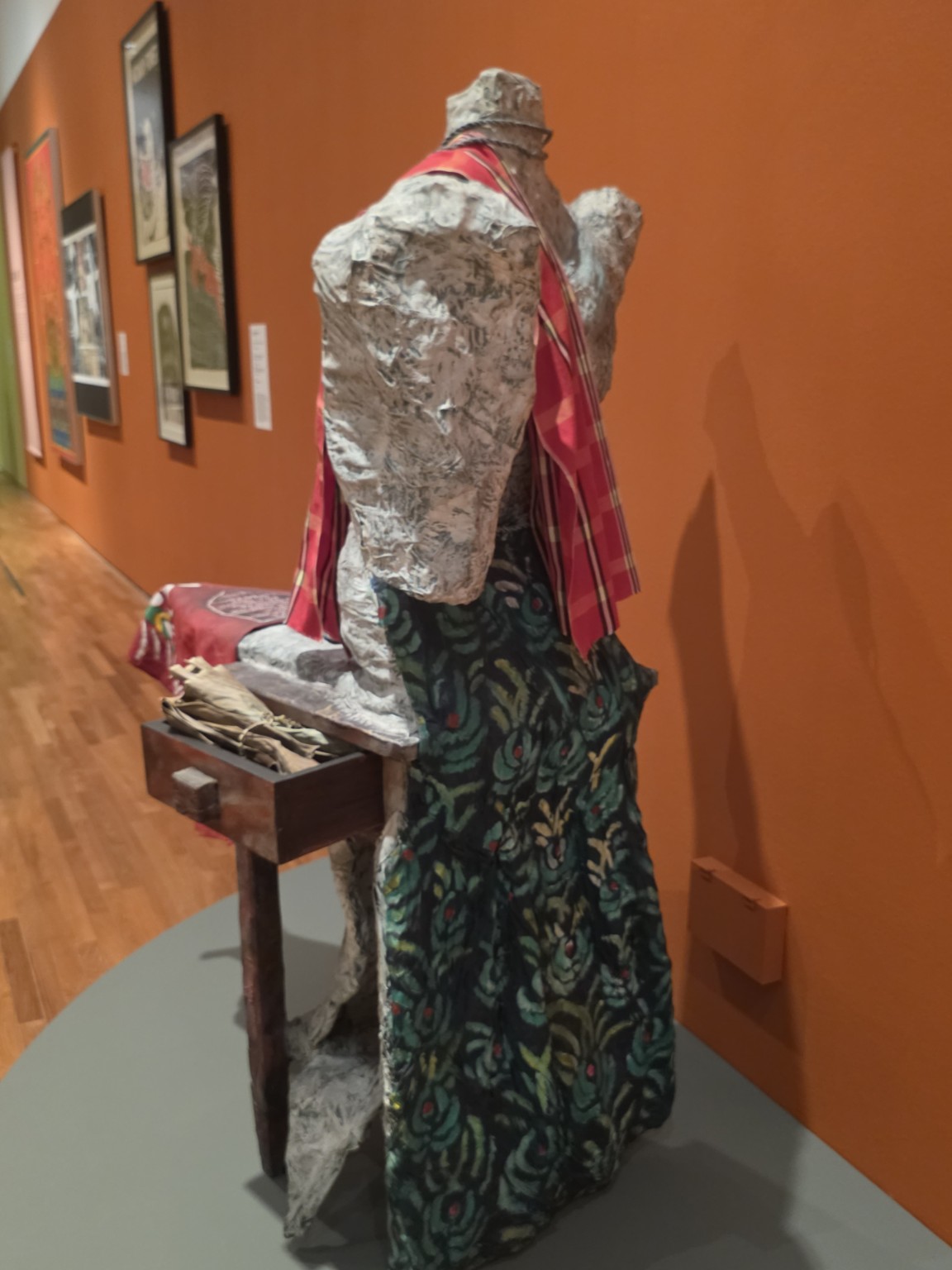
Looking together at my photographs of the sculpture’s front and back, I keep returning to the body: surrounded by household tools, yet missing its head and limbs. In Endaya’s At Marra’s Ironing Board (1992), I read the expectation that women provide care as a posture from which there is no escape.
The label connects the work to Philippine labour-export policies introduced in the 1970s. I wonder how leaving one’s own household to care for another can offer an income while also reinforcing the expectation that women should be caregivers.
Another viewpoint from Singapore
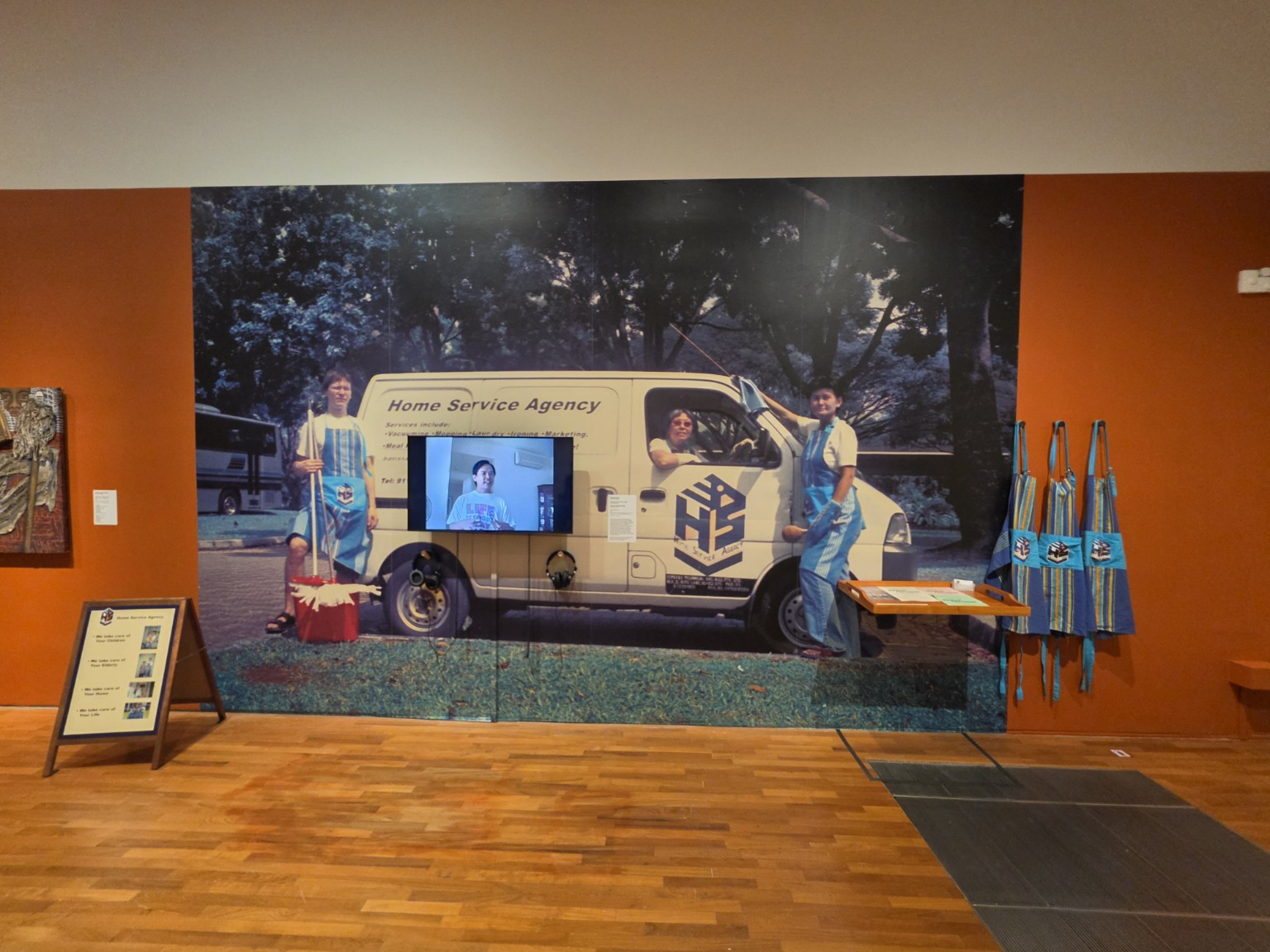
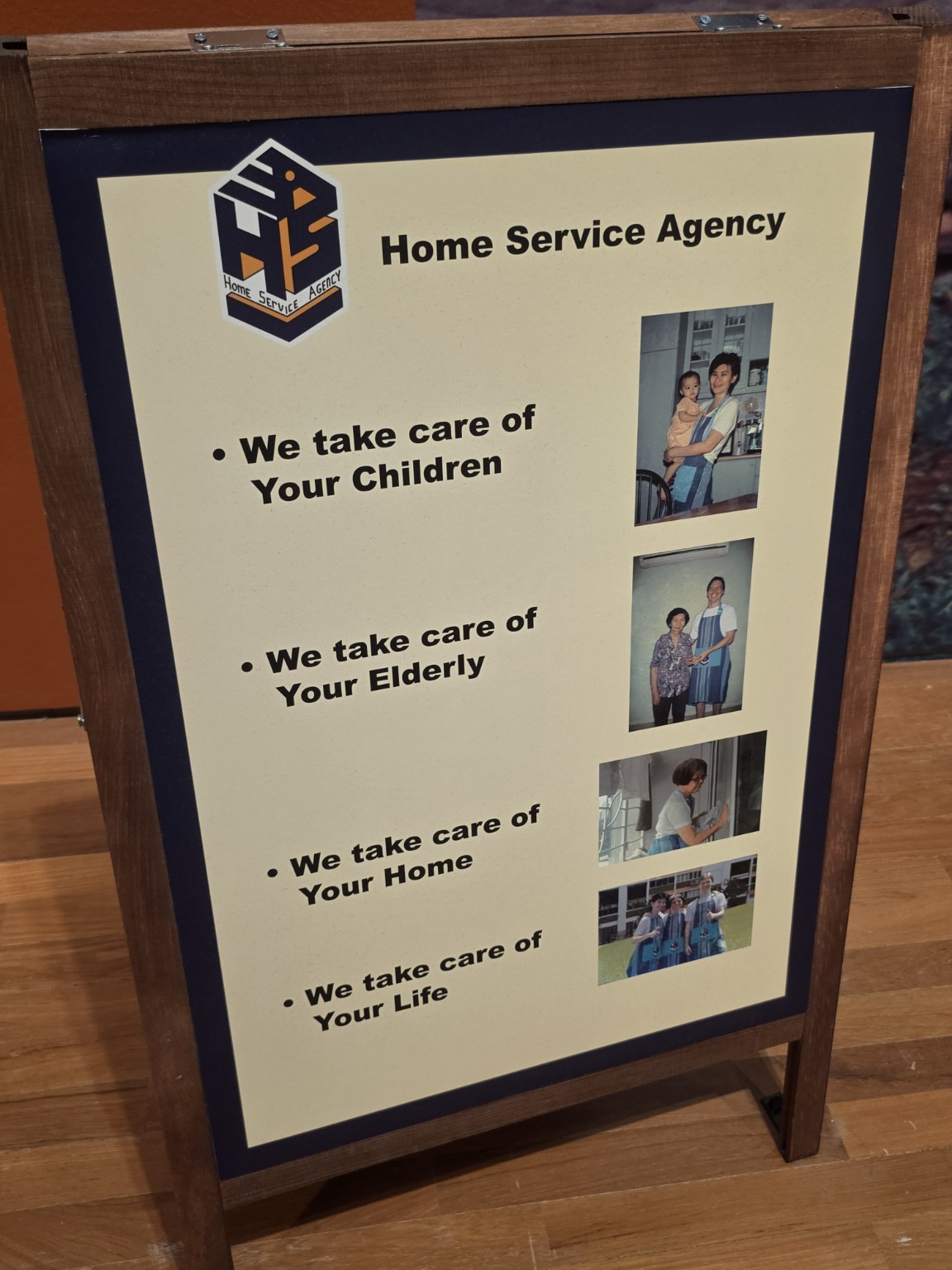
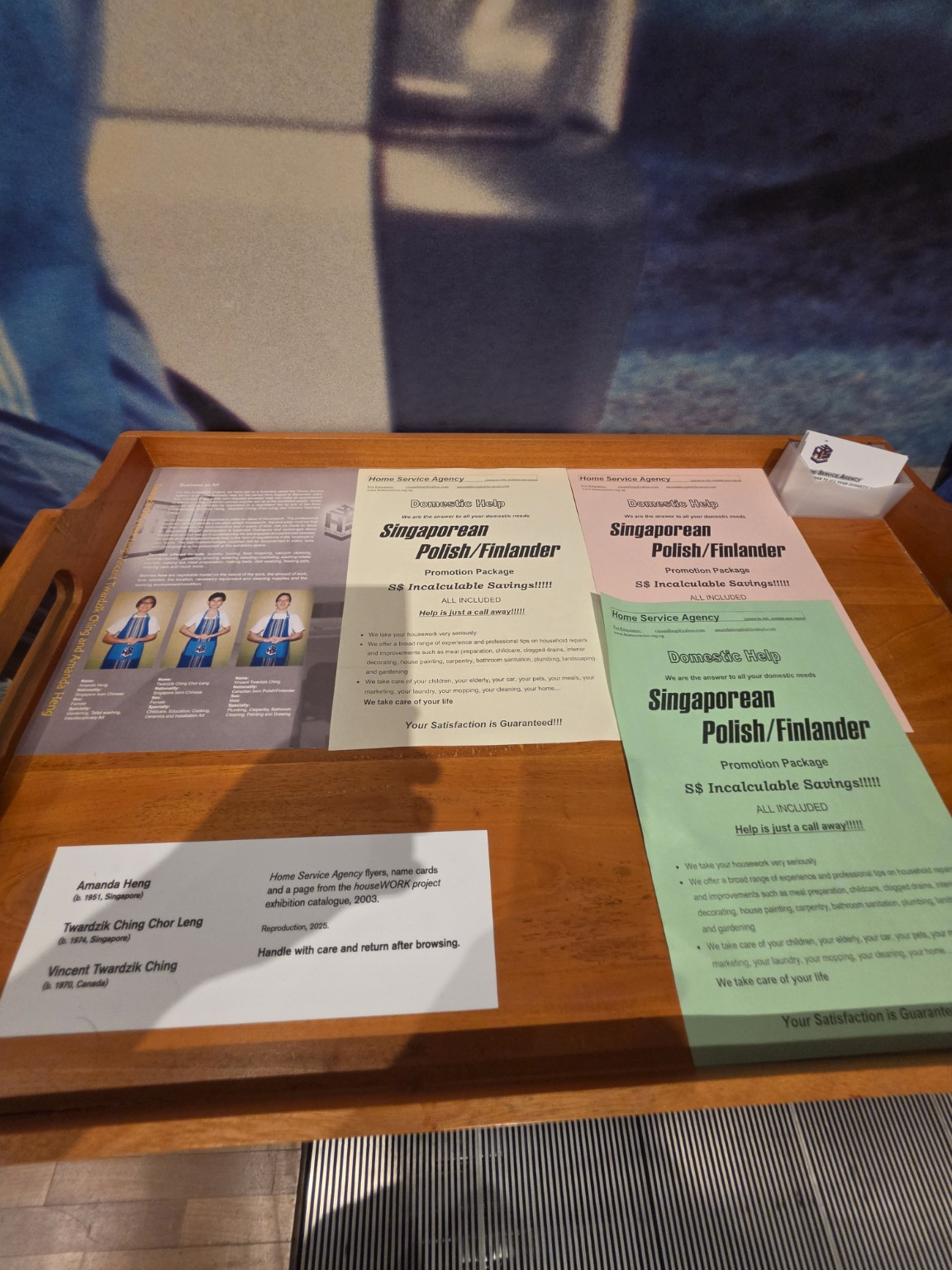
In Home Service (2003), Amanda Heng and her collaborators offered household services in exchange for conversations about the value of domestic work. The advertisements list nationalities, skills and promises of care, making me reconsider how familiar service language puts a price on labour.
A question I want to keep open
Reading the two projects together, I wonder how far artists’ temporary involvement can reach into the long-term employment relationships on which migrant workers depend. How can these works bring people overlooked in everyday life back into view?
Exhibition photographs supplied by Hu Chao. Artwork details and historical context are drawn from the photographed wall labels and National Gallery Singapore’s exhibition materials. Artist biographies are condensed from the Gallery and Singapore Infopedia.